The brain of the automated logistics center and the intelligent scheduling engine for Wanjia store distribution
“After applying Fuller's WMS+TMS warehousing and distribution integration solution, Shijie Automated Logistics Center achieved an average daily delivery capacity of 300,000 boxes. The WMS system is equivalent to the brain of the logistics center, unified command and coordination of automated equipment to achieve dynamic balance of operations. The TMS system is an intelligent scheduling engine for store distribution and transportation management. It ensures delivery timeliness and customer satisfaction through automated scheduling and in-transit tracking and other visual management. ”
Dynamic balancing of operations in highly automated logistics centers
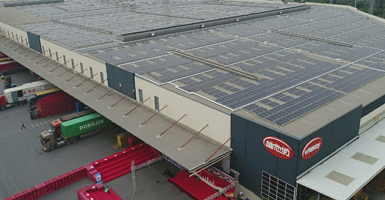
As one of the large-scale logistics centers with the highest degree of informatization and operational efficiency in the domestic retail industry, the Chashan Logistics Center has a warehouse area of 76,800 square meters. It is equipped with numerous automation equipment and has a huge business volume. The dynamic balance of operations in the logistics center has become the biggest difficulty. Under the unified scheduling of FLUX WMS, efficient receiving and shipping, storage, picking, sorting and replenishment processes are realized.
Main components of automation equipment of Chashan Shijie Logistics Center
- ASRS, an automatic three-dimensional warehouse, has 16 stackers and a total of more than 20,000 pallet positions.
- There are 8 picking and dismantling lines, each with 28 groups of fluent shelves, each group of shelves has 4 layers, and each layer has 6 picking positions.
- Pallet conveyor, including 2 double-station shuttles
- Box conveyor, 3000 meters long
- Slider type sorter, with a total of 70 sorting buckles on both sides, with a flow rate of 8,500 boxes/hour
Whole item storage and picking
Chashan Logistics Center applies ASRS to handle the storage and picking of entire goods. In terms of storage, based on the picking frequency and attributes of the goods, algorithm rules such as ABC classification, proximity to the receiving area, heavy goods at the bottom and light goods at the top, balanced distribution of inventory lanes with the same batch number, and stacker operation load balancing are combined to achieve the most reasonable use of ASRS in terms of storage space utilization and operating efficiency.
In terms of picking, wave planning is created, and FLUX WMS will combine the transportation scheduling plan, sorting port box volume balance, wave balance, new store goods and other factors to segment store orders. Through reasonable planning of the three areas of A/B/C commodities and the optimized dispatching algorithm of the WMS system, the entire piece picking has reached a picking capacity of 17,000 boxes/hour.
Class A goods
(High picking frequency) |
Front-of-house picking, 10,000 boxes per hour |
| Late picking, 3,600 boxes per hour |
B/C products
(Pick frequency is low) |
Lateral picking, 3,000 boxes per hour |
Sorting of entire items
In order to meet the sorting requirements of nearly 17,000 boxes/hour of entire goods, the Shijie Logistics Center has applied two high-speed slider sorting lines. In order to ensure the shortest time for wave operation switching (line clearing), WMS uses task balancing as the basic principle in allocating sorting ports.
Whole item seeding and collection
The labels of the boxes that pass through the sorting port clearly indicate the store and distribution location (01~10) corresponding to each box. WMS calculates the number of cages required for each store based on the number of boxes. At the sorting port where sowing is completed, workers follow the instructions on the label to complete the collection of goods on the cage car. Shijie Logistics Center has planned more than 30,000 cargo collection spaces, which are recycled according to the transportation dispatch plan.
Selection of broken goods
For broken goods, fluent shelves and one-to-one electronic label picking lines are used in the broken goods picking area to ensure picking efficiency and accuracy and reduce operating personnel. Logistics centers need to complete hundreds of thousands of pickings every day. Currently, CSJ can complete the dismantling and sorting of all order goods in a store in about 7 seconds.

 FLUX SCE Digital Supply Chain Solution
 FLUX WMS Warehouse Management System
 FLUX TMS Transportation Management System
 FLUX Datahub Data Integration Platform
 FLUX SC²P Supply Chain Collaboration Platform
 FLUX LES Production Logistics Execution System
 FLUX WCS Warehouse Control System
 SaaS WMS Cloud Warehouse Management System